Why Comparing a U11 to Mbappé Skews Your Stats (And How We’re Changing the Game)
In modern football, data has become the universal language. We scrutinize High-Intensity Runs (HSR) and Sprints as the ultimate judges of physical performance. But behind these numbers lies a major flaw that penalizes millions of amateur players and youth prospects.
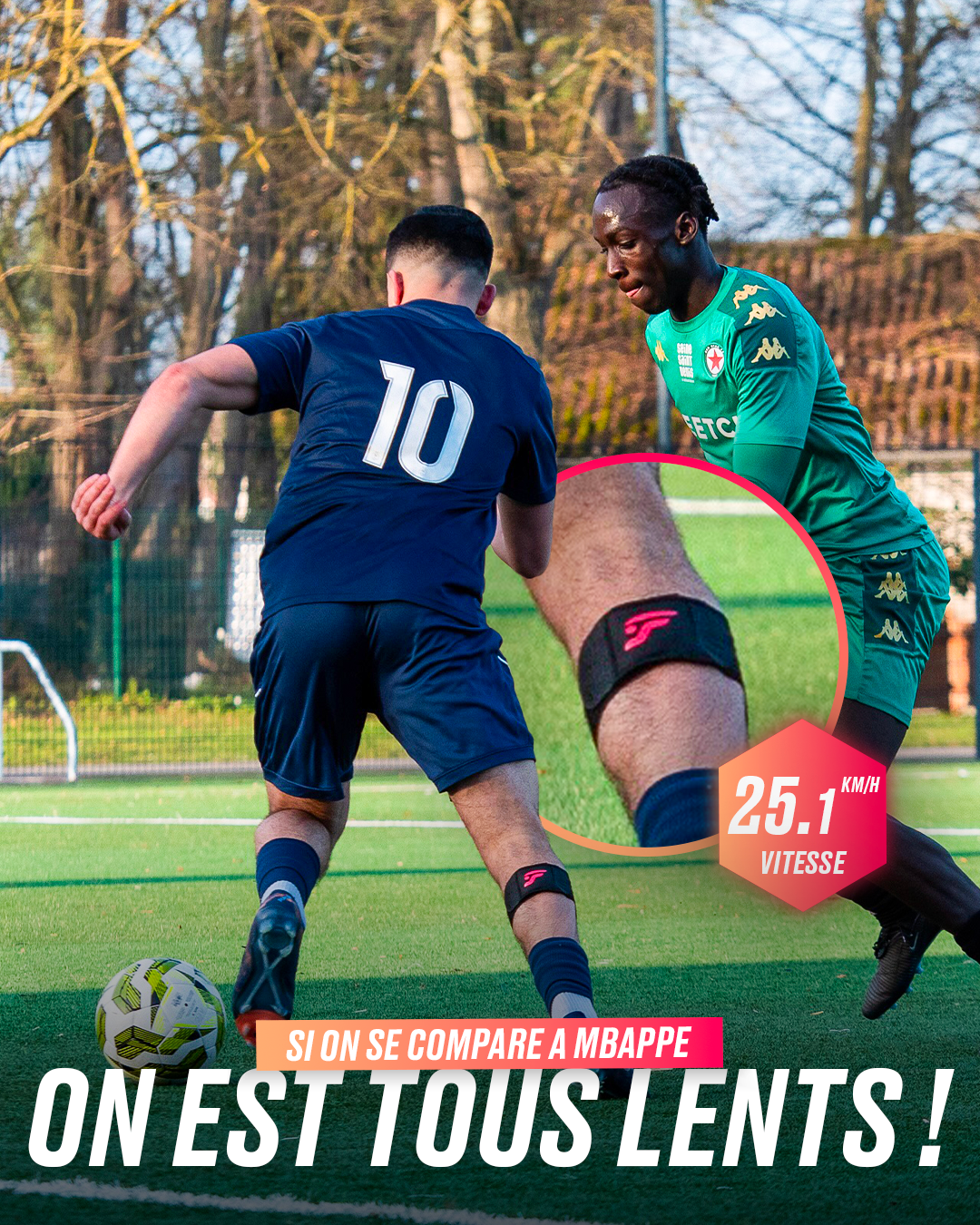
The "25.2 km/h" Trap: An Ill-Suited Elite Standard
Today, the majority of tracking tools use fixed thresholds modeled after elite standards (UEFA/FIFA), where a sprint officially begins at 25.2 km/h.
However, for a 12-year-old or an amateur player, this figure is often biologically unattainable. By applying this rule, the most intense efforts of these players become completely invisible in match reports. If the sensor doesn't "see" the effort, the coach cannot correctly evaluate the workload, which increases the risk of injury or undertraining.
The Footbar Innovation: Adapting Thresholds While Maintaining Rigor
To solve this problem, our data team conducted an extensive study (analyzing over 8,000 matches and training sessions) to redefine what a "sprint" is based on age and gender.
Rather than setting an arbitrary speed, we started with the volume of effort:
-
The Gold Standard: A pro covers an average of 700m at high intensity and 150m in sprints per match.
-
The Adaptation: We calculated, for each category, the speed at which a player must run to achieve that same relative volume of effort.

What the Data Tells Us: 3 Key Lessons
The study reveals essential physiological truths for better player management:
-
The Puberty Spike: In boys, we observe an explosion in top speed between ages 12 and 14. Using a fixed threshold during this period of rapid transformation is a major methodological error.
-
The Gender Divergence: The gap in sprinting capacity between boys and girls begins to widen significantly starting at the U13-U14 levels. Our thresholds adapt precisely to provide a fair evaluation.
-
The Maturity Plateau: From ages 17-18, physical capacities stabilize. It is only at this age that players should begin looking toward senior standards.
Why This Is a Revolution for You
By integrating these contextual thresholds directly into the Footbar app, we allow players and coaches to:
-
Track Real Progress: Compare yourself to your peers, not to idols on TV.
-
Manage Workload: Identify true intensity peaks to optimize recovery.
-
Value Effort: A "full-out" sprint should be rewarded by data, regardless of the player’s age.
The future of football isn't about asking kids to run like pros; it’s about giving them the tools of the pros to progress at their own pace.
👉 Read our full article: Scaling Approach to Running Intensity Thresholds in Youth and Amateur Football